

General Information
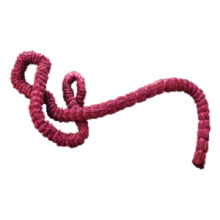
Ebola disease is caused by infection with any of a group of viruses known as orthoebolaviruses (formerly ebolavirus). There are 6 types of orthoebolaviruses with 4 having caused disease in humans to date: the Ebola virus, the Sudan virus, the Taï Forest virus and the Bundibugyo virus. Ebola disease was first identified in 1976 in the Democratic Republic of Congo and Sudan. Outbreaks most often occur in sub-Saharan Africa.
Symptoms
People with Ebola disease may experience “dry” symptoms early in the course of illness. These symptoms may include fever, aches, pains, and fatigue. As the person becomes sicker, the illness typically progresses to “wet” symptoms and may include diarrhea, vomiting, and unexplained bleeding. Orthoebolaviruses can cause serious and often deadly disease, with a mortality rate as high as 80 to 90 percent.
Transmission
People can get Ebola disease through contact with the body fluids of an infected sick or dead person. Some people can get the disease from contact with an infected animal, like a bat or non-human primate but this is rare. Someone with Ebola disease may start getting sick 2 to 21 days after contact with an orthoebolavirus. On average, symptoms begin 8 to 10 days after exposure.
Prevention
If you live in or are traveling to regions where Ebola disease has been diagnosed or is suspected, steps to protect yourself include avoiding contact with body fluids or items that may have contacted body fluids such as clothes and bedding and wearing appropriate personal protective equipment.
In the US and Canada, when an outbreak or public health emergency of international concern (PHEIC) is declared by the World Health Organization (WHO), proactive measures to protect the health and safety of the public include visitor restrictions, enhanced health screening and traveler monitoring for individuals arriving from affected areas.
For those travelling from the US and Canada to a potentially affected area, consult Travelers’ Health | CDC or Travel advice and advisories – Travel.gc.ca for notices regarding your destination.
Vaccination
ERVEBO® is a safe and effective vaccine approved for use by the FDA and Health Canada, but it is only effective against one of the viruses that causes Ebola disease, the Ebola virus. There are no approved vaccines for the Sudan virus, the Bundibugyo virus or the Taï Forest virus.
Treatment
Two treatments are approved by the FDA to treat Ebola disease caused by the Ebola virus. The efficacy of these treatments has not been established for the Sudan virus, the Bundibugyo virus or the Taï Forest virus.
Cleaning and Disinfection
Diligent and frequent cleaning and disinfection of environmental surfaces is a core strategy for the prevention and control of all infections. Ensure environmental services staff wear recommended personal protective equipment (PPE) to protect against direct skin and mucous membrane exposure to blood and body fluid contamination, and splashes or spatters that may occur during environmental cleaning and disinfection activities. Choice of PPE and appropriate donning and doffing procedures are crucial to safety when managing patients with Ebola disease. Follow specific instructions found at CDC Viral Hemorrhagic Fevers Guidance for Personal Protective Equipment or Health Canada Infection Prevention and Control Measures for Ebola Disease in Acute Care Settings. Staff must also be instructed in the appropriate disposal of contaminated items/equipment.
Orthoebolaviruses are enveloped viruses, meaning they are relatively easy to inactivate with EPA or DIN registered disinfectants. In the US, refer to EPA’s List L Registered Antimicrobial Products Effective Against Ebola Virus or Disinfectants for Emerging Viral Pathogens (EVPs) List Q Tier 1 for enveloped viruses. In Canada, refer to Health Canada’s Surface Disinfectants for Emerging Viral Pathogens.
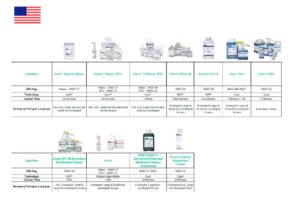
Diversey North American portfolio options are listed in the table below. For pathogen-specific efficacy questions, contact your disinfectant manufacturer.
Guidelines and Recommendations
Any hospital with suspected patients should follow CDC’s Recommendations for Hospitalized Patients with Known or Suspected Ebola Hemorrhagic Fever in Hospitals. https://www.cdc.gov/vhf/ebola/clinicians/cleaning/hospitals.html
Detailed guidelines and recommendations are available at the following links:
WHO:
CDC:
- http://www.cdc.gov/vhf/ebola/hcp/infection-prevention-and-control-recommendations.html
- http://www.cdc.gov/vhf/ebola/hcp/environmental-infection-control-in-hospitals.html
- https://www.cdc.gov/vhf/ebola/history/chronology.html
FDA
Cleaning and Disinfection of Environmental Surfaces
The following disinfectants qualify based on the above EPA and PHAC (Public Health Agency of Canada) recommendations as disinfectants.
An EPA-registered hospital disinfectant with label claims against Ebola on List L, or Emerging Viral Pathogens for Tier 1, non-enveloped viruses should be used for disinfection. These are published on List Q.
The EPA List Q Emerging Viral Pathogens includes the following (Ebola is considered a Tier 1):
Ebola Us
References: See guidelines and recommendations noted in the body of this document.